
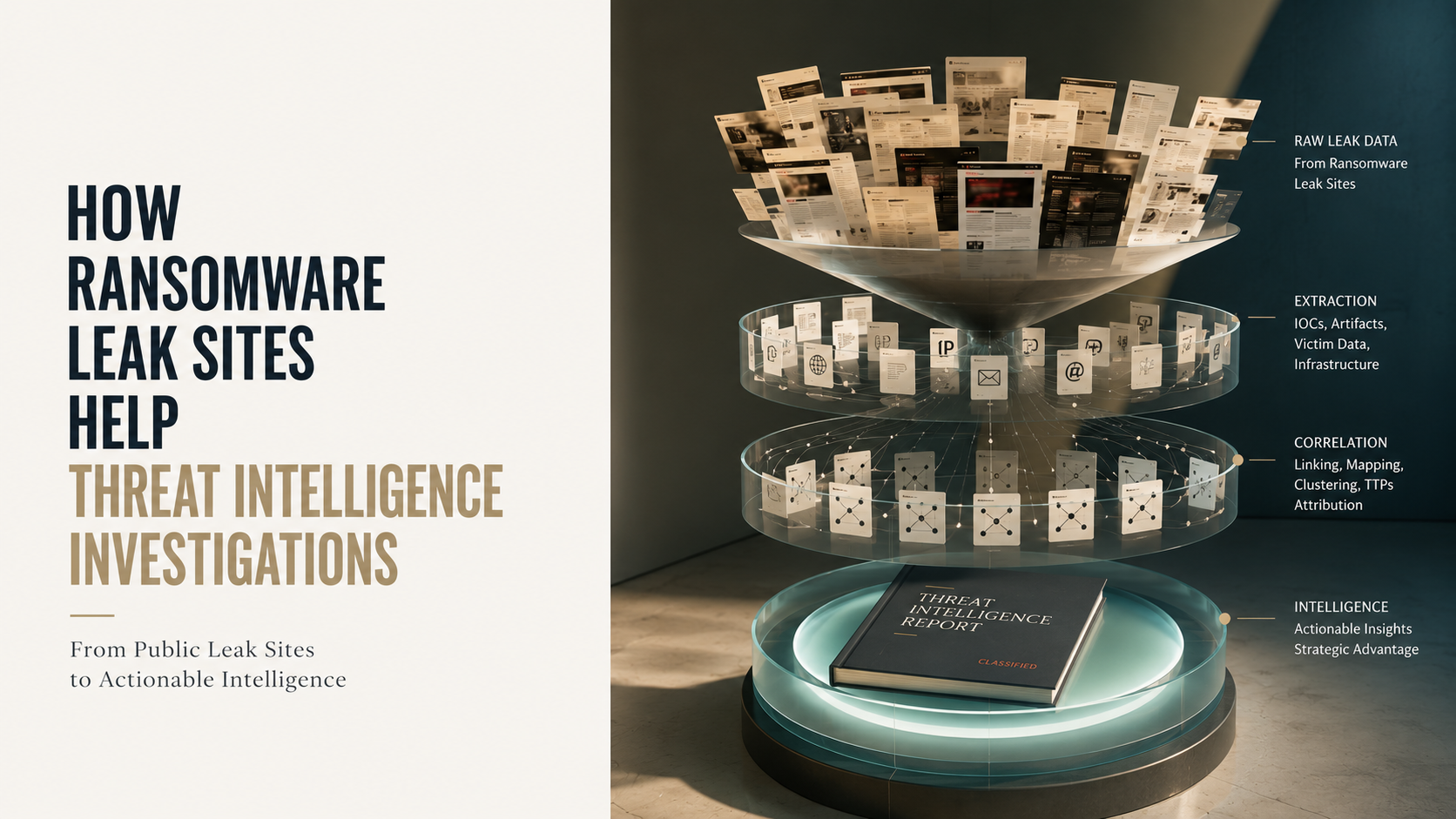
In the ever-evolving landscape of cybersecurity, ransomware attacks continue to pose one of the most significant threats to organizations worldwide. As cybercriminals refine their tactics, ransomware leak sites have emerged as a double-edged sword: tools of extortion for attackers and invaluable sources of intelligence for defenders. These platforms, where threat actors publicly post stolen data to pressure victims, offer threat intelligence teams a window into adversary operations, enabling proactive defense and informed investigations.
This comprehensive guide explores the mechanics of ransomware leak sites, their role in threat intelligence, practical applications, challenges, and best practices for leveraging them effectively. Whether you're a cybersecurity professional, incident responder, or executive seeking to bolster organizational resilience, understanding these sites is essential in today's threat landscape.
Understanding Ransomware Leak Sites
Ransomware leak sites, often hosted on the dark web via Tor (.onion) domains, represent a key evolution in the ransomware ecosystem. Unlike traditional ransomware that simply encrypts files and demands payment for decryption, modern operations frequently employ a "double extortion" model: encrypting data while exfiltrating sensitive information and threatening its public release.
These sites function as "walls of shame," listing victim organizations, leaking samples of stolen data, and sometimes including countdown timers or negotiation details. Prominent examples include those operated by groups like LockBit, Akira, RansomHub, and Play. Platforms like Ransomware.live aggregate and monitor these sites, tracking thousands of victim postings annually.
The rise of Ransomware as a Service (RaaS) has democratized these operations. In the RaaS model, core developers build sophisticated ransomware tools, leak site infrastructure, and affiliate portals, then recruit less-skilled affiliates who execute attacks and share profits (typically 60-80% to affiliates). This franchise-like structure has fueled an explosion in activity, with leak site postings surging in recent quarters.
SEO Keyword Note: Primary terms like ransomware leak sites and threat intelligence are integrated naturally for search visibility.
The Evolution of Ransomware and Leak Sites
Ransomware has transformed from opportunistic malware into a sophisticated cybercrime industry. Early variants focused on encryption alone, but the introduction of data exfiltration and leak sites shifted the paradigm toward sustained pressure.
Groups like Conti (now splintered into entities like Akira) and LockBit pioneered advanced leak operations. By 2025-2026, the landscape features dozens of active groups, with new entrants like Silent, Crypto24, and Bert emerging rapidly. Leak sites now serve multiple purposes: extortion, recruitment signaling, and competitive posturing among threat actors.
RaaS amplifies this by providing turnkey solutions, including leak site hosting. Affiliates gain access to proven tools, reducing barriers to entry and increasing attack volume. This proliferation means security teams must monitor a broader, more dynamic set of sites.
How Ransomware Leak Sites Fuel Threat Intelligence
Ransomware leak sites are an intelligence goldmine for threat intelligence investigations. They inadvertently reveal adversary tactics, techniques, and procedures (TTPs), targeting preferences, and operational tempo.
**Early Warning and Victim Identification
**Monitoring leak sites allows threat intelligence teams to detect breaches before official notifications. Metadata from leaked files such as internal paths, usernames, or document properties can reveal compromised systems, supply chain exposures, or third-party risks. For instance, Recorded Future and similar platforms analyze text posts, images, and file metadata from over 100 extortion sites to identify direct and indirect victims.TTP Mapping and Attribution
Leak sites expose group-specific behaviors: preferred sectors (e.g., manufacturing, healthcare), geographic targets, ransom demands, and negotiation styles. Analysts can map these to MITRE ATT&CK frameworks, improving detection rules and threat hunting. Patterns in data samples help attribute attacks to specific actors, even as groups rebrand or splinter.Indicator of Compromise (IoC) Extraction
Leaked data often contains valuable IoCs: malware samples, command-and-control infrastructure, stolen credentials, or toolmarks. This enriches threat feeds for SIEM, EDR, and firewall systems, enabling blocking of future attacks.Supply Chain and Third-Party Risk Insights
Many leaks involve vendors or partners. Threat intelligence derived from these sites helps organizations assess ecosystem risks. Tools like Black Kite's Ransomware Susceptibility Index integrate leak data with vendor monitoring.Trend Analysis and Predictive Intelligence
Aggregate data from sites reveals seasonal spikes, emerging vulnerabilities, and shifting tactics. For example, surges in postings against specific industries signal broader campaigns, allowing proactive patching and awareness campaigns.
Real-World Examples of Leak Site Intelligence in Action
LockBit and Operation Cronos: Despite law enforcement disruptions, monitoring LockBit's leak site provided ongoing insights into affiliate activities and new variants.
Akira and Healthcare Targets: Akira's prolific leaks highlighted vulnerabilities in healthcare, enabling targeted defenses and intelligence sharing via ISACs.
RansomHub and High-Profile Incidents: Analysis of their postings revealed high-payout strategies and data auction tactics, informing negotiation playbooks. Platforms like Ransomware.live track hundreds of groups and tens of thousands of victims, turning raw leak data into structured intelligence.
Tools and Techniques for Monitoring Leak Sites
Effective threat intelligence requires systematic monitoring:
Automated Scrapers and Aggregators: Tools like Ransomware.live, Hudson Rock, or commercial platforms (Bitsight, Group-IB, Recorded Future) provide real-time alerts.
Dark Web Monitoring Solutions: Continuous scanning of forums, marketplaces, and leak sites for mentions of your organization or industry.
OSINT Integration: Combine with open-source intelligence, Telegram channels, and underground forums.
AI/ML Enhancement: Advanced platforms use machine learning to analyze metadata, detect patterns, and prioritize alerts.
Manual Analysis: For deep investigations, security researchers examine leaked samples for TTPs. Best practices include ethical considerations avoid downloading illegal content without authorization and compliance with data protection regulations.
Benefits for Organizations and Investigators
Leveraging ransomware leak sites in threat intelligence delivers tangible advantages:
Proactive Defense: Identify exposures early, rotate credentials, and patch vulnerabilities.
Incident Response Acceleration: Rapid assessment of breach scope during active incidents.
Risk Prioritization: Focus resources on high-threat actors and sectors.
Regulatory Compliance: Demonstrate due diligence in monitoring for GDPR, HIPAA, or similar requirements.
Intelligence Sharing: Contribute to community efforts via ISACs or platforms like H-ISAC reports. Studies and reports consistently show that organizations with robust dark web and leak site monitoring experience faster detection and reduced impact from attacks.
Challenges and Ethical Considerations
Despite benefits, challenges exist:
Volume and Noise: Hundreds of postings require efficient filtering.
OpSec Risks: Accessing Tor sites demands secure environments to avoid counter-surveillance.
False Positives: Not all listings are verified; some may be exaggerated or fabricated.
Legal and Ethical Issues: Handling stolen data requires caution. Organizations should work with authorized threat intelligence providers.
Evasion Tactics: Groups increasingly use private channels or selective leaks. Balancing intelligence gathering with ethical standards is crucial for sustainable operations.
Best Practices for Integrating Leak Site Intelligence
Establish Continuous Monitoring: Integrate into your SOC or threat intel platform with automated alerts.
Build Playbooks: Define response workflows for when your organization or vendors appear on sites.
Cross-Reference Data: Validate with internal logs, EDR alerts, and external feeds.
Train Teams: Educate analysts on interpreting leak data and TTPs.
Collaborate: Share anonymized insights with industry peers and law enforcement.
Measure ROI: Track metrics like reduced dwell time or prevented incidents.
Layer Defenses: Combine with strong backups, segmentation, zero-trust architecture, and employee training.
Future Trends in Ransomware Leak Sites and Threat Intelligence
The ransomware landscape will likely see further fragmentation with more RaaS variants, AI-enhanced malware, and sophisticated evasion. Leak sites may evolve with encrypted postings, decentralized hosting, or integration with blockchain for "proof of leak."
Threat intelligence will increasingly rely on AI for predictive analytics, automated attribution, and real-time response. Expect greater focus on supply chain attacks and critical infrastructure targeting. Law enforcement operations will continue disrupting major groups, but new ones will emerge quickly.
Organizations investing in advanced threat intelligence capabilities today will be better positioned tomorrow.
Conclusion
Ransomware leak sites transform a tool of criminal intimidation into a strategic asset for threat intelligence investigations. By providing visibility into adversary operations, early breach indicators, and actionable TTPs, these sites empower defenders to shift from reactive to proactive postures.
As ransomware threats persist and evolve through RaaS models and double extortion, consistent monitoring and analysis of leak sites must become a cornerstone of modern cybersecurity strategies. Organizations that harness this intelligence effectively not just to respond, but to anticipate and prevent will significantly enhance their resilience against one of the most pervasive cyber threats.
Implement robust monitoring today, foster cross-team collaboration, and stay informed through reliable sources. The intelligence is there; the question is whether your organization is ready to act on it.


